
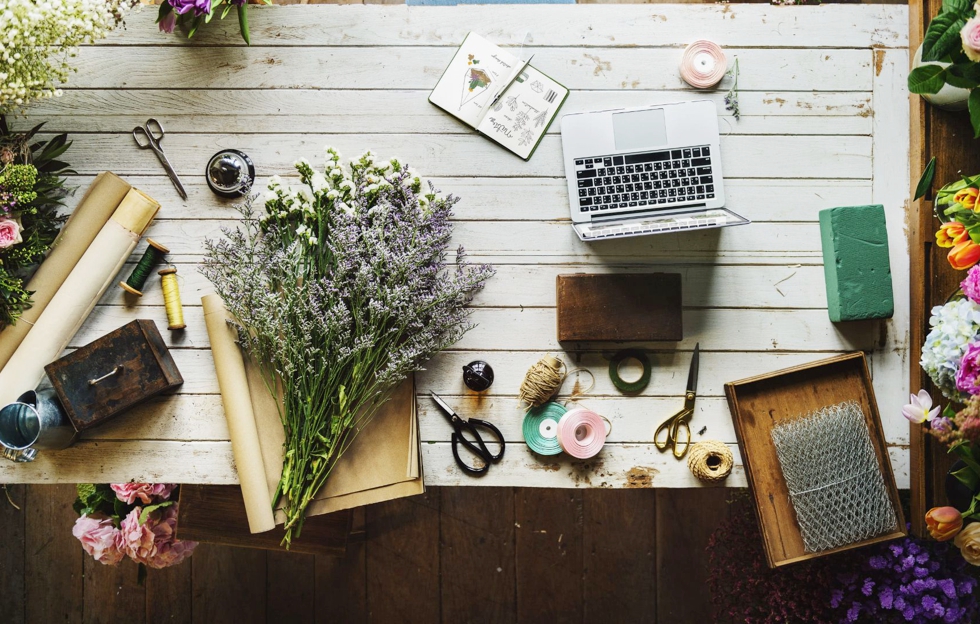
The art of arranging flowers and other plant elements into compositions has been known for centuries and was formerly known as bouquet making. People dealing with this craft – florists. Nowadays, due to the international professional terminology, the most commonly used term is florist.
Flower arrangements had and still have numerous functions and purposes. They changed with fashion, the availability of materials and the tastes of recipients. Their common feature is artistic value and aesthetic impact related to the shaping of space and the impact on the psyche of recipients. The symbolism of plants, often referred to as speech or the language of flowers, is also important. The art of arranging flowers, known since antiquity, developed in two directions. In Europe, it was mostly decorative and in Asia it was symbolic, especially in Japan, where ikebana style has been known since the second century AD.
The oldest known and documented plant compositions were created in Persia and were made of roses. With time, new species of flowers were used, they were grown for interior decoration. In the Middle Ages, flowers growing wild in fields and meadows were mainly used. Houses were decorated mainly with herbs that were supposed to scare away evil spirits.
In the Baroque era, characterized by splendour, flower arrangements were also characterized by excess and splendour. With the advent of the Rococo style, the compositions acquired finesse and lightness. During the period of classicism, bouquets became elegant and refined. In neoclassicism, a new trend in floristry appeared, consisting in combining flowers with fruit.
Starting from the 19th century, two new trends emerged, which are also present today, i.e. Biedermeier (for example, bouquets tailored to the bride’s hand) and the French style (related to the scent of flowers). In the 21st century, floristry is developing very dynamically and dominates the trends variety of plants, styles and accessories.